10 Things Nobody Tells You Before Moving to North Cyprus
When people talk about North Cyprus online, the conversation usually revolves around sunny weather, beautiful beaches, affordable living, and university life. And while those things are true, they only tell part of the story.
The reality of moving abroad is that the biggest challenges often come from the things nobody mentions until after you’ve already arrived. Whether you’re moving as an international student, job seeker, remote worker, or relocating with family, in this guide we will cover the practical realities people often discover the hard way.
The goal isn’t to discourage you.
It’s to help you arrive prepared.

If I Could Go Back: What I Wish I Knew Before Booking My Flight
If I could give one piece of advice to every newcomer, it would be this:
North Cyprus is easier to enjoy when you arrive with realistic expectations.
Before moving, I would have wanted someone to tell me:
- Bring more savings than you think you’ll need
- Don’t rush into the first apartment you see
- Research transportation before choosing accommodation
- Check internet availability before signing a rental agreement
- Expect paperwork to take longer than advertised
- Understand work permit rules before accepting a job
- Budget for deposits, commissions, and setup costs
Most people don’t struggle because North Cyprus is difficult. They struggle because they arrive expecting something different. But here’s the truth, moving abroad always comes with struggle whether it’s an island or a landlocked country.
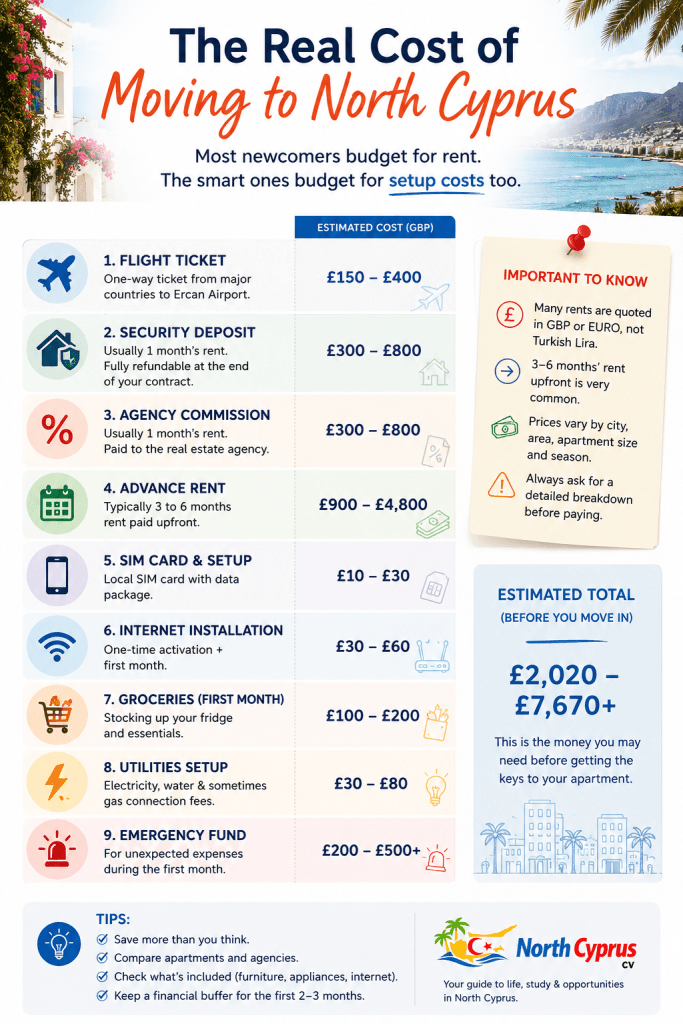
1. Renting an Apartment Costs Far More Than the Monthly Rent
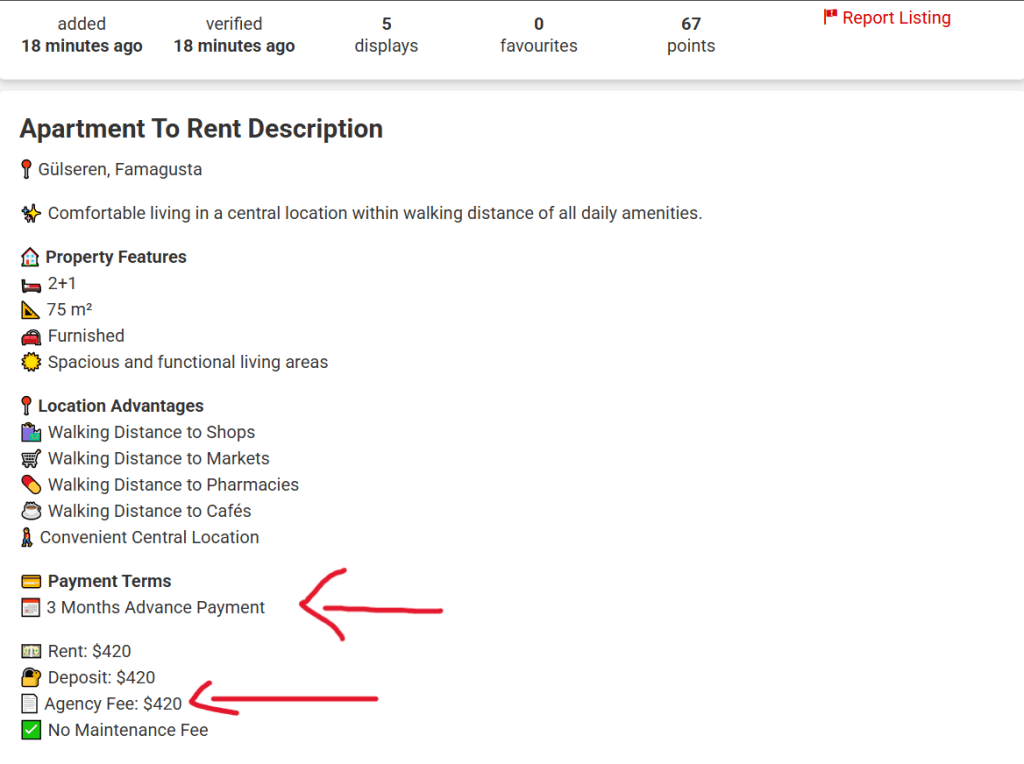
One of the first shocks many newcomers experience is the amount of money required before moving into an apartment.
In many cases, landlords or agencies request:
- Security deposit
- Agency commission
- Advance rent payment
A common arrangement is:
- 1 month deposit
- 1 month commission
- 3 months rent upfront
However, many renters increasingly report being asked for:
- 6 months rent upfront
For example:
A £500 apartment may require:
- £500 deposit
- £500 commission
- £1,500–£3,000 advance rent
Total move-in cost:
£2,500–£4,000+
This catches many students and workers off guard.
2. The Currency Is Turkish Lira — But Major Expenses Often Aren’t
Most daily purchases happen in Turkish Lira.
However, some of the biggest expenses are commonly quoted in:
- British Pounds (£)
- Euros (€)
Particularly:
- Apartment rentals
- Property sales
- Vehicle purchases
- Certain contracts
This means exchange rate fluctuations can directly impact your budget.
Many newcomers expect everything to be priced in Turkish Lira and are surprised when landlords discuss rent in Sterling.
3. Public Transport Is More Limited Than Many Expect
If you’re coming from a country with trains, metro systems, or extensive bus networks, transportation may feel different.
Most residents rely on:
- University shuttle buses
- Dolmuş (shared minibuses)
- Taxis
- Ride-sharing
- Friends with cars
Outside main routes, transportation options become less convenient.
This is especially noticeable in:
- Kyrenia
- Lefke
- Smaller towns and villages
Choosing accommodation close to your university or workplace can significantly improve your daily life.
4. Finding a Truly Flexible Part-Time Job Can Be Difficult
Many students arrive expecting to easily find part-time work.
The reality is more complicated.
A common challenge is that employers frequently prefer:
- Full-time staff
- Long shifts
- Weekend availability
- Flexible scheduling from employees
Even when students specifically need part-time work.
Many international students hear:
“We need someone full-time.”
This doesn’t mean jobs don’t exist.
It means balancing work and studies can be more difficult than newcomers expect.
5. Your Job Description May Not Remain Your Job Description
This is one of the most frequently discussed realities among international workers.
In some workplaces, employees may be expected to perform duties outside their original role.
Examples commonly reported include:
- Baristas helping with cleaning duties
- Reception staff assisting with housekeeping tasks
- Retail workers unloading deliveries
- Waiters performing general cleaning work
Not every employer operates this way.
Many are professional and well-organized.
However, it’s common enough that newcomers should be aware of it before accepting a position.
6. Healthcare Is Better When You Understand It Before You Need It
Many newcomers only research healthcare after becoming sick. Private healthcare is widely available and often more affordable than many Western countries.
However, it’s important to understand:
- Insurance coverage
- Nearby clinics
- Emergency procedures
- University health services
- Prescription costs
before an emergency happens. Preparation matters.
7. Pharmacies Play a Bigger Role Than You Might Expect
Pharmacies are an important part of daily life in North Cyprus.
Many residents visit pharmacies for:
- Health advice
- Minor illnesses
- Basic treatments
- Over-the-counter medications

Experienced pharmacists often become valuable resources for newcomers navigating the local healthcare system. Finding the nearest pharmacy should be one of your first priorities after moving.
8. Summer Heat Is More Serious Than Instagram Makes It Look
Photos rarely capture what July and August actually feel like.
Temperatures frequently exceed:
- 35°C
- 40°C+
Many people adjust their routines around the weather.
A typical summer day often involves:
- Early morning activities
- Indoor afternoons
- Evening social life
Air conditioning is not a luxury.
It’s a necessity.
Electricity costs during summer are also something many newcomers underestimate.
9. Internet Quality Depends Heavily on Location
Internet infrastructure has improved considerably.
However, performance can vary significantly between properties.
Before renting, always ask:
- Which provider serves the property?
- Is fiber available?
- What speeds are achievable?
- Is the connection shared?
This is particularly important for:
- Remote workers
- Online students
- Content creators
- Freelancers
The apartment with the better internet is often the better apartment.
10. Life Moves Slower Here
One of the biggest cultural adjustments for many newcomers is pace.
Compared to larger international cities, North Cyprus often operates at a slower rhythm.
This can affect:
- Administrative processes
- Repairs
- Deliveries
- Appointments
- General bureaucracy
For some people, this is frustrating.
For others, it’s one of the best parts of life on the island.
The key is adjusting expectations.
Things That Shock Students Most
After speaking with international students, these surprises appear repeatedly.
Shock #1
Move-in costs are much higher than expected.
Shock #2
Finding truly flexible student jobs can be difficult.
Shock #3
The summer heat feels much stronger than expected.
Shock #4
Major expenses are often priced in Pounds rather than Turkish Lira.
Shock #5
The first month is usually the most expensive month.
Expectation vs Reality
| Expectation | Reality |
|---|---|
| Rent is cheap | Upfront costs can be significant |
| Part-time work is easy | Many employers prefer full-time availability |
| Everything uses Turkish Lira | Many major expenses are quoted in Pounds |
| Public transport goes everywhere | Transport options are limited outside major routes |
| Beach life every day | Most students spend more time studying than sunbathing |
| Fast paperwork | Patience is often required |
The Real Monthly Budget Most Newcomers Underestimate
Many people budget for only tuition and rent.
The reality includes:
- Groceries
- Utilities
- Internet
- Mobile phone
- Transportation
- Eating out
- Healthcare
- Household essentials
- Social activities
The first few months are usually the most expensive because you’re building your life from scratch.
Common Mistakes New Arrivals Make
Mistake #1
Choosing accommodation before understanding transport.
Mistake #2
Budgeting only for rent.
Mistake #3
Ignoring internet quality.
Mistake #4
Signing rental agreements too quickly.
Mistake #5
Not keeping an emergency fund.
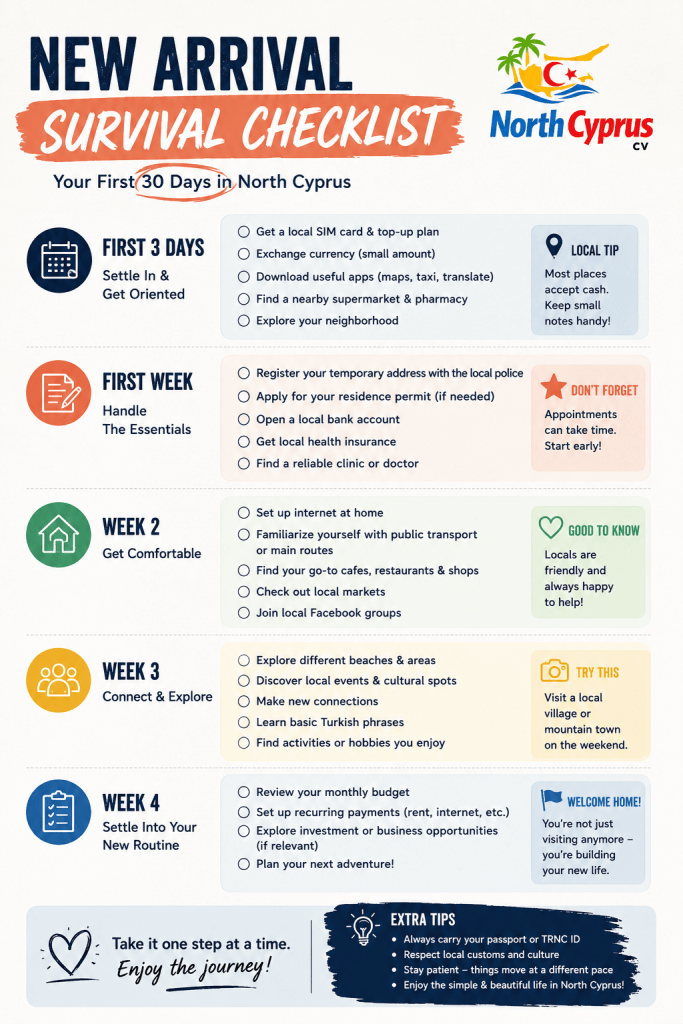
First Week Survival Guide
Day 1
- Buy a SIM card
- Exchange money
- Learn your local area
Day 2
- Visit your university or workplace
Day 3
- Find nearby supermarkets
Day 4
- Complete necessary registrations
Day 5
- Locate clinics and pharmacies
Day 6
- Test transport routes
Day 7
- Build your monthly budget
Before You Move Checklist
✓ Passport
✓ Admission letter or employment documents
✓ Emergency savings
✓ Accommodation plan
✓ Health insurance
✓ Digital document backups
✓ International banking access
✓ SIM card strategy
✓ Transport research
✓ Internet research
Local Insights Most Guides Miss
Air Conditioning Costs Matter
Many people budget for rent but underestimate summer electricity bills.
Location Often Matters More Than Apartment Quality
Being closer to campus or work can save substantial money and time.
Grocery Prices Can Change Quickly
Exchange rates and imports can influence everyday costs.
Furnished Apartments Vary Greatly
Always ask exactly what furniture and appliances are included.
Who Will Love North Cyprus?
You’ll Probably Love North Cyprus If:
- You enjoy Mediterranean weather
- You like coastal living
- You appreciate slower-paced lifestyles
- You value international communities
- You don’t need a massive city environment
You May Struggle If:
- You rely heavily on public transport
- You expect big-city infrastructure
- You dislike bureaucracy
- You need a large corporate job market
One Year Later: What Most People Say
The first few months often feel overwhelming.
Everything is unfamiliar.
You’re learning new systems, navigating paperwork, managing finances, and adapting to a new environment.
But after a year, most people stop worrying about:
- Transport
- Grocery shopping
- Healthcare
- Banking
- Accommodation
And start focusing on:
- Friendships
- Career opportunities
- Studies
- Travel
- Lifestyle
The challenges feel biggest at the beginning.
The longer you stay, the easier daily life becomes.
Final Thoughts
North Cyprus can be an incredible place to study, work, or start a new chapter of life.
The people who enjoy it most aren’t necessarily the people who arrive with the biggest budgets.
They’re the people who arrive with realistic expectations.
The sunshine is real.
The beaches are real.
The opportunities are real.
But so are the deposits, paperwork, transportation challenges, and daily adjustments.
Understanding both sides before you move will make your transition smoother, less stressful, and far more enjoyable.
Frequently Asked Questions
Is North Cyprus affordable?
Compared to many Western countries, often yes. However, housing setup costs and imported goods can be more expensive than newcomers expect.
How much money should I bring when moving?
Enough to cover rent, deposits, commissions, utilities, food, transport, and emergency expenses for several months.
Can international students easily find jobs?
Some do, but finding genuinely flexible student-friendly work can be more difficult than expected.
Is healthcare good in North Cyprus?
Private healthcare is generally accessible, but understanding insurance and healthcare options beforehand is important.
Do I need a car?
Not necessarily, but living near your university or workplace can significantly reduce transport challenges.